
A root canal removes infection from inside a tooth and saves it from being pulled. If you have severe tooth pain, swelling, or a tooth that aches long after hot or cold, you may need one.
If you’re in pain right now, call (703) 420-5250. We make room for patients who are hurting.
Root canals have a scary reputation they don’t deserve. With modern numbing and techniques, most patients say it felt like getting a long filling. The pain people associate with root canals usually comes from the infection itself, not the treatment. The whole point of a root canal is to take the pain away.
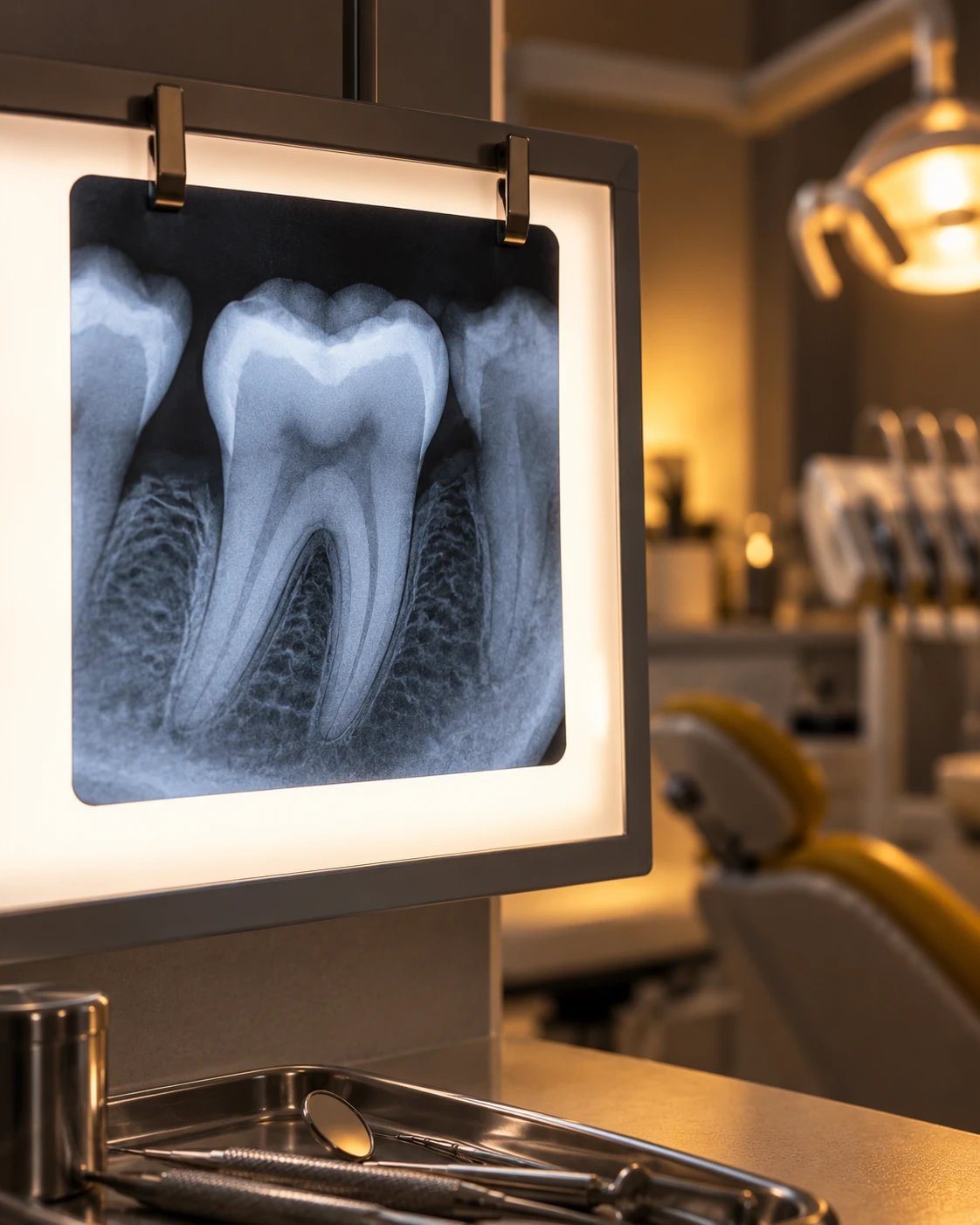
Inside every tooth is a soft core called the pulp, which contains nerves and blood vessels. When deep decay, a crack or an injury lets bacteria reach the pulp, it becomes inflamed or infected. Because it’s trapped inside the hard tooth, the pressure builds, and that causes the intense, throbbing pain. Left untreated, the infection can spread to the bone and form an abscess.
Sometimes an infected tooth causes no pain at all and only shows up on an X-ray. That’s another reason regular checkups matter.
We numb the tooth and the area around it thoroughly.
We make a small opening to reach the infected pulp.
We remove the pulp and carefully clean and shape the inside of the root canals.
We fill and seal the canals to keep bacteria out.
We place a filling, and in most cases, a crown at a later visit to keep the tooth strong.
Most people go back to work or school the same day. It’s normal for the tooth to feel a little tender for a few days, which usually responds well to over-the-counter pain relief. Avoid chewing hard foods on that side until your permanent crown is in place.
Pulling a tooth can seem simpler or cheaper at first. But a missing tooth lets neighboring teeth shift, can change your bite, and often needs to be replaced later with an implant or bridge, which costs more. In most cases, saving your natural tooth is the better long-term choice. If a tooth truly can’t be saved, we’ll tell you honestly and discuss extraction and replacement.
The cost depends on which tooth is treated. Front teeth have one root, while molars can have three or more, which takes longer. Most insurance plans cover part of a root canal. You’ll get a written estimate that includes the crown, so there are no surprises.
A treated tooth can last a lifetime with good care. Keeping your natural tooth means you won’t need an implant or bridge later, your bite stays the same, and your jawbone stays healthy.
Most root canals are followed by a crown. If a tooth can’t be saved, see tooth extractions and dental implants. If you’re in pain now, see dental emergencies.

With modern numbing, most people say it feels like a long filling. It relieves the pain of the infection.
Sometimes, but keeping your natural tooth is almost always better for your bite, your jawbone and your wallet in the long run.
Usually one or two visits of about an hour to ninety minutes each.
Usually, especially for back teeth. The crown protects the tooth from breaking.
Antibiotics can calm swelling, but they can’t clear infection from inside the tooth. The tooth still needs treatment.
Call (703) 420-5250. We make room for patients who are hurting.
Book online in about a minute, or call us at (703) 420-5250. New patients are always welcome.