
A dental implant is a permanent replacement for a missing tooth. A small titanium post acts as a new root, and a custom crown sits on top. It looks, feels and works like a natural tooth, and with good care it can last for decades.
Whether you’re missing one tooth, several, or a full arch, implants can give you back the confidence to smile, laugh and eat without thinking twice.
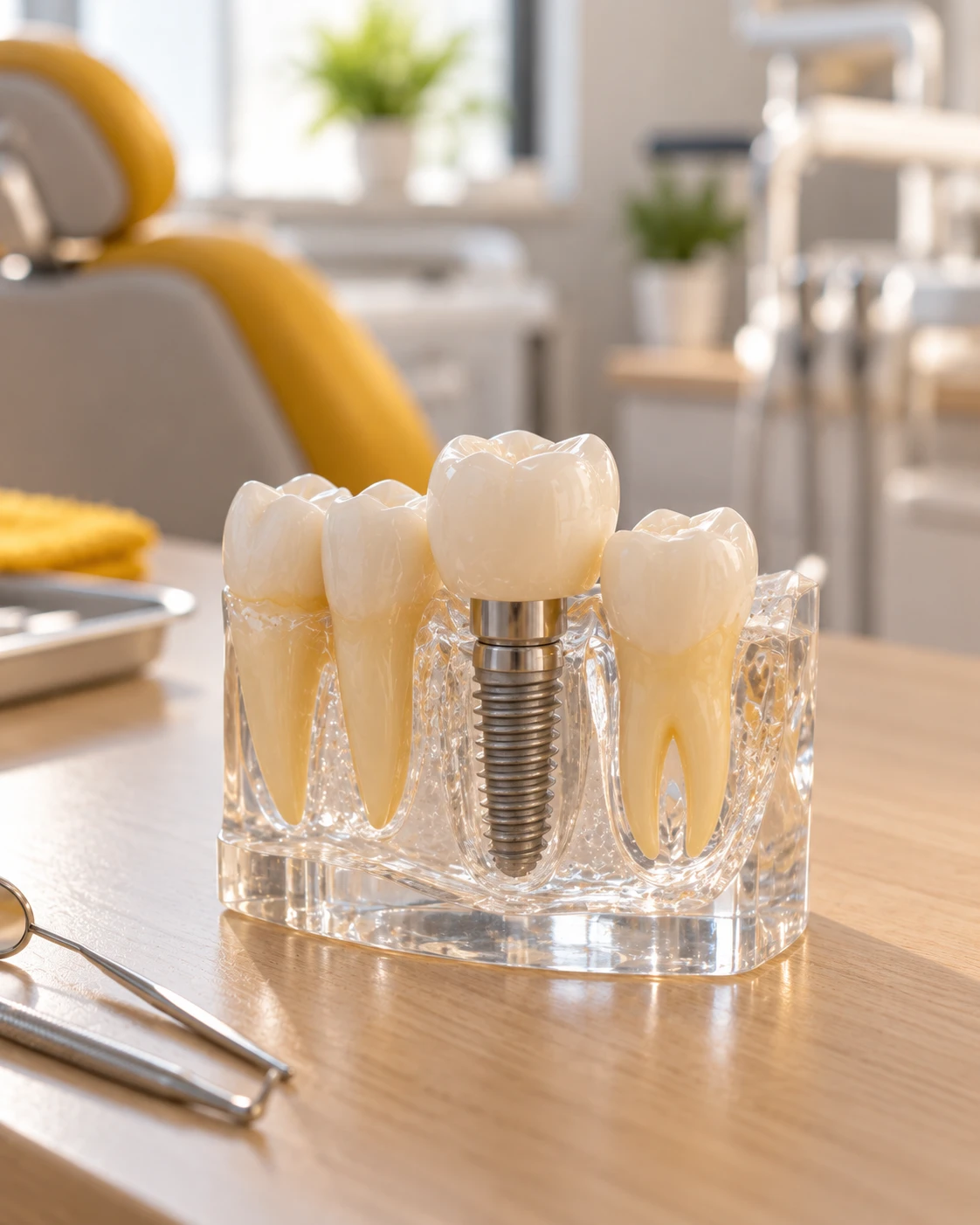
No slipping, clicking or adhesives like with dentures.
Apples, steak, corn on the cob, crusty bread.
Bone shrinks where a tooth is missing. An implant stimulates the bone and helps prevent that.
Unlike a bridge, healthy teeth next to the gap don’t need to be reshaped.
Your new crown is color-matched to your smile.
With good care, implants can last for decades.
A gap isn’t just about looks. Over time, the teeth on either side can drift into the space, the tooth above or below can shift, and your bite can change. The jawbone where the tooth used to be slowly shrinks, which can change the shape of your face. Replacing a missing tooth, whether with an implant or another option, helps prevent all of this.
One post and one crown to replace one missing tooth.
Two or more implants support a row of replacement teeth, great for several missing teeth in a row.
A full set of upper or lower teeth anchored securely on a small number of implants.
Dentures that snap onto implants, so they don’t slip.
Dr. Ghorab looks at your teeth, gums and jawbone, and talks with you about your goals, your health and your budget. You’ll get a written plan with costs.
If a damaged tooth needs to come out, or if you need a bit more bone, we’ll take care of that first.
With the area fully numbed, the small post is placed gently into the jawbone.
Over a few months, the implant bonds with your bone. You won’t be left with a gap while you wait. We’ll give you a temporary option.
We attach a custom crown, bridge or denture matched to your smile, and check your bite.
Most healthy adults who are missing teeth can have implants. Good candidates usually have healthy gums and enough jawbone to support the implant. Smoking, uncontrolled diabetes and some medications can affect healing, so we’ll review your health history carefully. If you’ve lost some bone, bone grafting can often make implants possible.
Each option has its place. Implants are the closest thing to natural teeth and protect your jawbone. Bridges are faster and involve no surgery, but they rely on neighboring teeth. Dentures are the most affordable up front but can slip and need replacing over time. We’ll lay out all three honestly, including costs, so you can decide.
Implants can’t get cavities, but the gums around them can still get infected. Brush twice a day, clean around the implant daily with floss or a water flosser, and keep up with your checkups and cleanings.
Implant costs depend on how many teeth are being replaced, whether you need extra steps like an extraction or bone graft, and the type of restoration on top. Some insurance plans cover part of the cost. At your consultation, you’ll get a written plan with every cost spelled out, and we’ll help you compare it with other options like bridges.
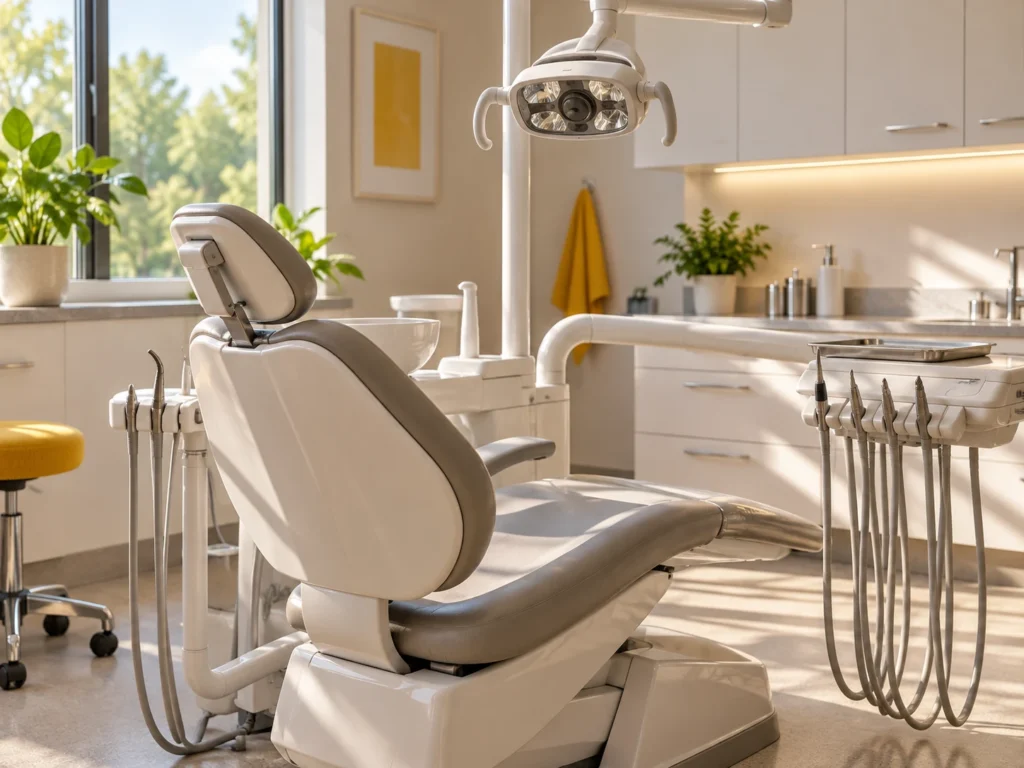
The area is fully numbed. Most patients describe mild soreness for a few days afterward, manageable with over-the-counter pain relief.
Usually a few months from start to finish, because the implant needs time to bond with your bone.
Most healthy adults are. A consultation and a quick scan will tell us for sure.
The implant itself can last for decades. The crown on top may need replacing after 10 to 15 years.
Some plans cover part of the cost. We’ll check your benefits and give you a written estimate.
Often, yes. If some bone has been lost, we may recommend a bone graft first.
Book online in about a minute, or call us at (703) 420-5250. New patients are always welcome.