
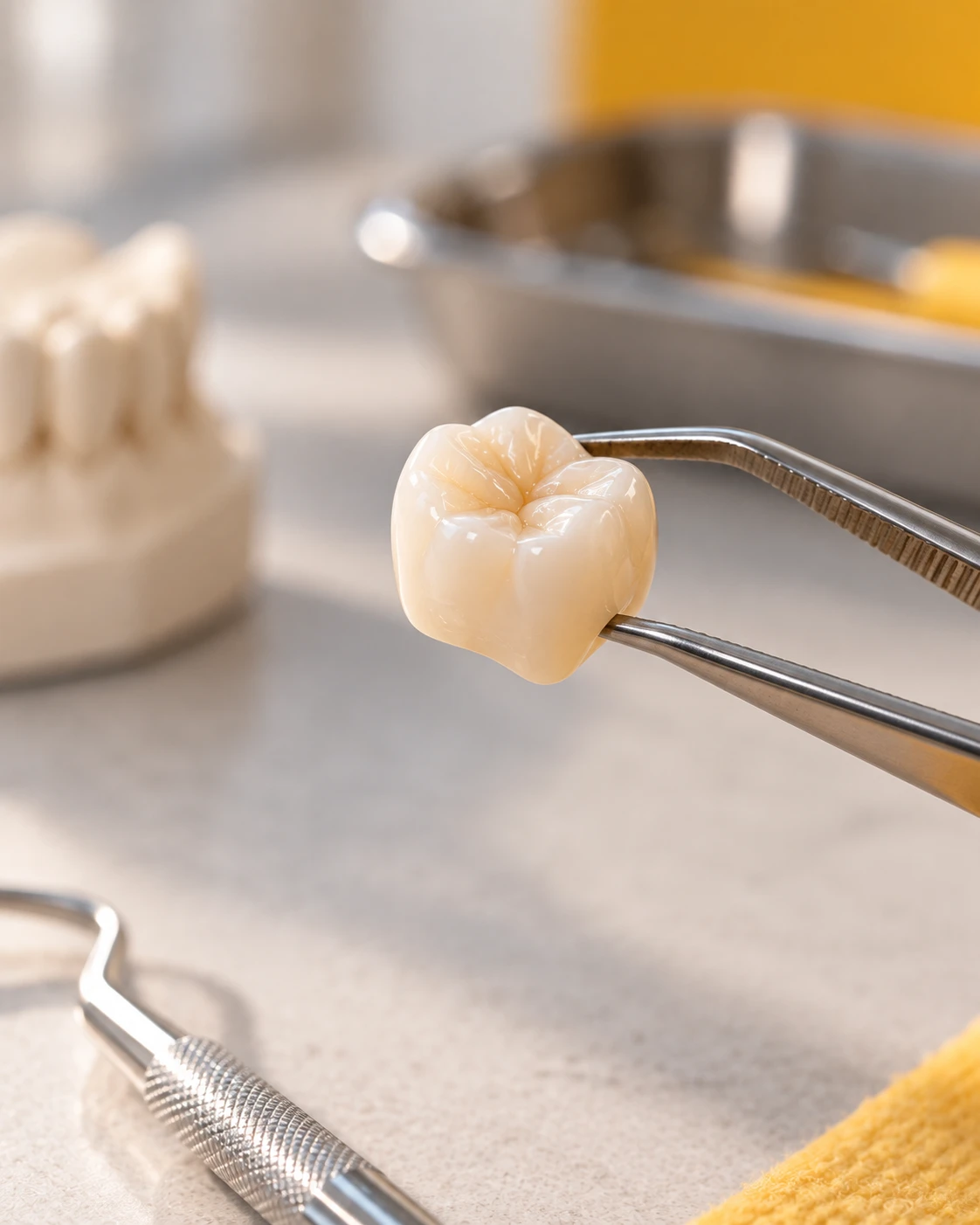
A crown is a custom cap that covers a damaged tooth to protect it and restore its shape. It’s the go-to fix for teeth that are cracked, badly decayed, heavily filled, or have had a root canal. A well-made crown looks natural and lets you chew with confidence again.
On this page
A cracked or weakened tooth can keep breaking under the pressure of chewing. A crown covers the whole visible part of the tooth, holding it together and spreading the force of your bite evenly. It’s like a helmet for your tooth.
We check the tooth, take X-rays, and explain why a crown is the right choice, along with the cost.
With the tooth fully numbed, we gently shape it to make room for the crown.
We take an impression and match the shade to your natural teeth.
You’ll leave with a temporary crown so you can go about your day.
At your second visit, we fit the permanent crown, check your bite, and make sure it feels completely natural.
We match the color and shape of your crown to the teeth around it, so no one will know it’s there. For back teeth, we focus on strength for chewing. For front teeth, we focus on a natural look.
Treat it like a natural tooth. Brush twice a day, clean between your teeth daily, and keep up with your checkups. The tooth under the crown can still get decay at the edges, so good cleaning matters. If you grind your teeth, a night guard can help protect your crown.
Crown costs depend on the tooth, the material and whether any other treatment is needed first. When a crown is medically necessary, most insurance plans cover part of the cost, usually under major services. We’ll check your plan and give you a written estimate before any work begins.
Modern crowns are usually made of porcelain or ceramic, which look natural and are strong enough for everyday chewing. For back teeth that take a lot of force, we may suggest a stronger material. We’ll recommend what fits your tooth, your bite and your budget.
After a root canal, a tooth becomes more brittle, especially back teeth. A crown protects it from breaking. That’s why most root canals on back teeth are followed by a crown.
If you’re missing a tooth, see dental implants and bridges. For a tooth that’s infected inside, see root canal treatment.
If you notice any of these, call us. A small problem caught early is usually simple to fix.
Commonly ten to fifteen years, and often longer with good care.
The tooth is fully numbed. Most people feel some mild sensitivity or gum soreness for a day or two afterward.
Usually two: one to prepare the tooth, and one to fit the permanent crown.
When it’s medically necessary, most plans cover part of the cost. We’ll check your benefits first.
It’s rare, but it can happen. If it does, keep the crown and call us. We can often re-cement it.
Usually yes, especially for back teeth, because the tooth becomes more brittle after treatment.
Book online in about a minute, or call us at (703) 420-5250. New patients are always welcome.