
A dental bridge replaces one or more missing teeth by anchoring replacement teeth to the natural teeth on either side of the gap. It’s fixed in place, so there’s nothing to take out at night, and it’s matched to your smile so it looks natural.
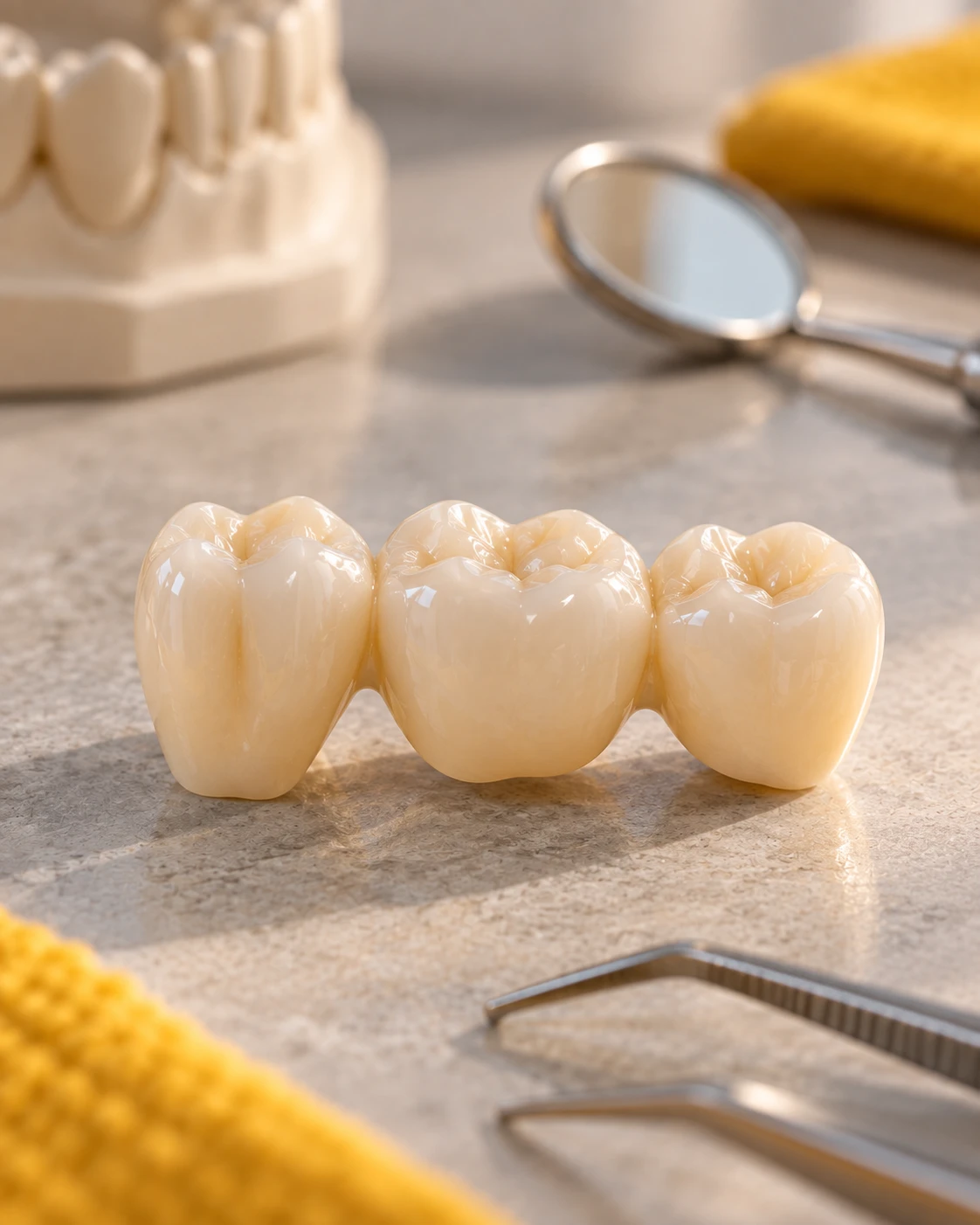
A traditional bridge has three parts: two crowns that fit over the healthy teeth on either side of the gap, and one or more replacement teeth in between. The whole piece is made as one unit and cemented in place. You brush and use it like your own teeth.
The most common type, anchored to crowns on both sides of the gap.
Anchored on one side only, used when there’s a tooth on just one side of the gap.
Anchored to dental implants instead of natural teeth, a great option for several missing teeth in a row.
Both work well, and the right choice depends on you. A bridge is usually faster and doesn’t involve surgery. It’s a particularly good option when the teeth next to the gap already need crowns. An implant doesn’t touch the neighboring teeth and helps protect your jawbone, but it takes a few months to complete. We’ll lay out both honestly, including costs, so you can decide.
We check the supporting teeth and gums and take X-rays.
With the area numbed, we gently shape the teeth on either side of the gap.
We take an impression and place a temporary bridge.
At your second visit, we fit and adjust your permanent bridge and make sure your bite feels right.
Food and plaque can collect under the replacement tooth, so daily cleaning there is important. We’ll show you how to use a floss threader, special bridge floss or a water flosser. It takes about a minute a day. Keep up with regular checkups so we can check the supporting teeth.
The cost depends on how many teeth are being replaced and the materials used. A bridge often costs less up front than an implant. Many insurance plans cover part of the cost when replacing a missing tooth. We’ll check your benefits and give you a written estimate.
Bridges work best when the teeth on either side of the gap are healthy and strong enough to support it. If those teeth already have large fillings or need crowns, a bridge can be a smart choice because it restores them at the same time. If they’re perfectly healthy, an implant may be better because it leaves them untouched.
A gap can let nearby teeth drift, change your bite, make chewing harder, and lead to bone loss in the jaw. Replacing the tooth, with a bridge or an implant, keeps your smile stable and healthy.
Compare with dental implants, or see crowns to learn more about how the supporting teeth are protected.
Most people adjust to a new bridge within a few days. Your bite may feel a little different at first. Start with softer foods and cut food into smaller pieces, then return to your normal diet as it starts to feel natural. If anything feels high or uncomfortable after the first week, call us for a quick adjustment.
Speaking is often easier with a bridge than with a gap, especially for front teeth. Many patients tell us they didn’t realize how much they’d been hiding their smile until the gap was filled.
We don’t default to one answer for a missing tooth. We’ll look at the health of the teeth next to the gap, your bone, your budget and your timeline, then explain honestly whether a bridge or an implant makes more sense for you. If a bridge is the right call, we take care to make it look like part of your natural smile.

Typically ten to fifteen years with good care.
We’ll show you. A floss threader or water flosser does the job in about a minute a day.
The teeth are numbed during preparation. Some mild sensitivity for a few days is normal.
Many plans cover part of the cost when replacing a missing tooth. We’ll check your benefits.
Yes. After a short adjustment period, most people eat normally. Avoid very hard or sticky foods.
Book online in about a minute, or call us at (703) 420-5250. New patients are always welcome.